Designing a villa menu the chef will actually enjoy cooking
A private chef in your villa is only as good as the brief you give. The simple, slightly counter-intuitive rules we use to make sure the food is the night's headline.
Lara · Founder, Lara
· Updated
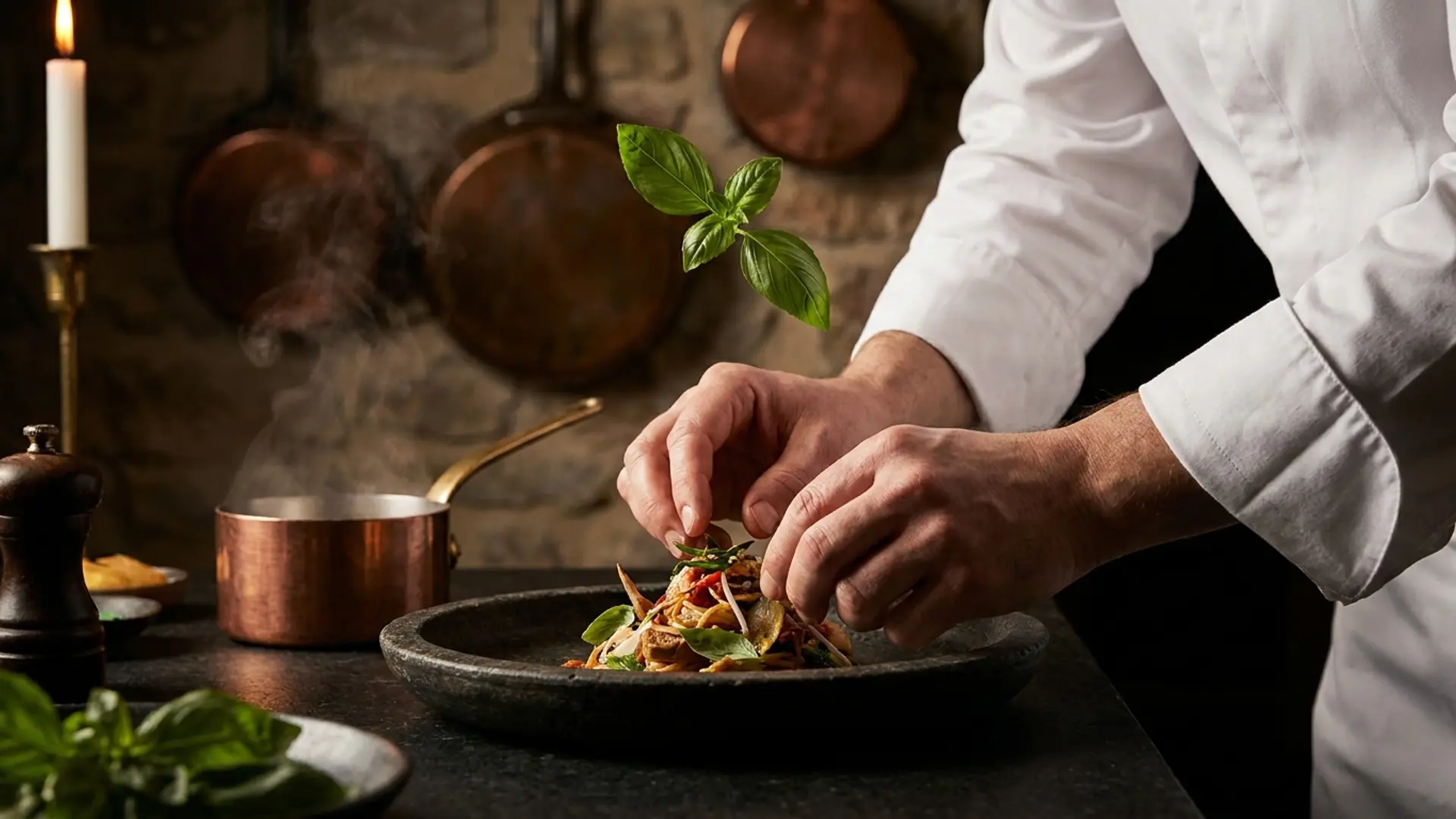
How to Brief a Private Chef in Bangkok
The fastest way to ruin a private chef dinner is to ask for everything. The second-fastest is to ask for nothing and leave the chef to guess. The right brief lives in between, and that’s where the preparation call earns its keep.
A good private chef in Bangkok can do anything from a tight five-course tasting to a single perfect roast for ten. What they cannot do is discover, two hours before service, that the group now wants a sushi course. Villa kitchens are small. Chefs travel with a specific brigade and the exact equipment for the brief they were given. Anything beyond that is improvisation, and improvisation is where standards slip.
The Three Questions That Decide the Menu
Before anything goes to the chef, we ask the host group three questions. The answers shape the menu more than any list of favourite dishes.
1. What was the last great meal someone in the group had?
Not their all-time favourite restaurant, but the most recent meal they were still thinking about at breakfast the next morning. That answer tells us the register: technical, ingredient-led, comforting, theatrical. Chefs cook differently for each, and matching that register is more important than copying a dish.
2. Who in the group eats the least?
Not allergies or hard restrictions — those are obvious and always accounted for — but the quiet eater, the person who pushes food around at long dinners. Designing the menu around them, not the loudest or most enthusiastic eater, is the difference between a table that finishes together and a table that drifts apart by course four.
3. What is the evening doing after dinner?
A menu that ends at 11pm with a transfer to a members’ room is not the same as one that ends at 1am with everyone still at the table. Heavy desserts before a night out are a quiet cruelty. The arc of the evening — move on, or stay put — dictates how rich, how long, and how sharp the final courses should be.
One group might recall the tasting menu at Sorn. Another, a simple boat noodle soup found near Victory Monument.
Why Fewer Courses Are Almost Always Better
The instinct on a villa weekend is to ask for a long tasting menu: eight courses, paired wines, the works. We almost always push back.
A five-course menu, properly executed in a villa kitchen, beats an eight-course menu every time. The chef has more attention per plate. The pacing feels human. The wine pairing has room to breathe. Nobody is too full to enjoy the last course.
The exception is the milestone dinner — a birthday, a closing, a real occasion. Then we go long, deliberately. And we tell the chef explicitly: this is the night; build it like a headline show, not a warm-up.
A dinner at Le Normandie has a full brigade of forty. Your villa chef on Surin Beach has two assistants and one kitchen counter.
Local, but Not Performatively Local
Most groups visiting Bangkok ask for “Thai food, but elevated.” It’s a fair brief, and Thai chefs at this level execute it beautifully. The trap is asking for that, unchanged, three nights in a row.
By night two, the palate flattens. By night three, the dishes blur into each other, no matter how good they are.
Our default for a three-night villa stay:
- One Thai-led night – rooted in local flavours, structured for comfort rather than shock.
- One ingredient-led European night with Thai accents – technique-forward, seasonal, with Thai notes where they make sense.
- One casual night – a wood-fire grill in the garden, staff relaxed, the host group eating with their hands. Variety isn’t only about the food; it changes the shape and energy of the evening.
The chef finds wild Phuket peppercorns at the Karon morning market. They become the sharp, fragrant heat in a French steak au poivre.
What We Never Let the Host Decide on the Day
Two things are non-negotiable on the day of service:
- The order of courses
The same brief works for an executive offsite — perhaps even more so, because the meal is doing double duty as the day's only unscheduled hour. The chef who knows the group's register is the chef who lets the conversation breathe.
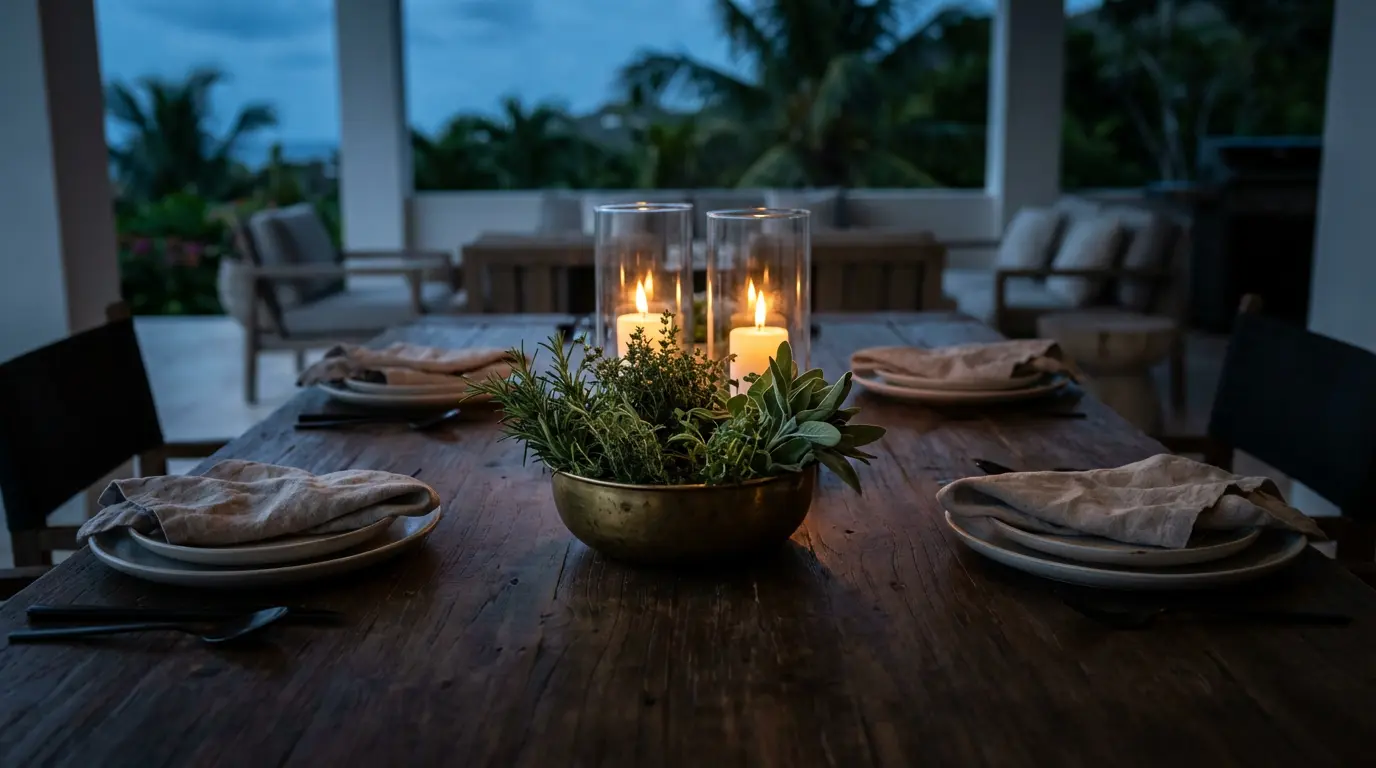
If you want a villa menu shaped by a private chef we know through the network, send us the dates.
The chef, the host, and the rest of the on-site team are detailed on the in-house staff side — they're what makes the day actually feel private.
Continue with