Bangkok vs Singapore for an executive offsite
Singapore is the obvious choice. Bangkok is the better one — for the right team, the right week, and the right reasons. An honest comparison.
Lara · Founder, Lara
· Updated

Most leadership teams in this region default to Singapore for the regional offsite. It is safe, English-speaking, an hour from anywhere with a corporate runway, and the slide deck looks the same in the Marina Bay tower as it does in the Bangkok one. We understand the default. We also know which weeks Bangkok wins, and we are honest about which weeks Singapore wins, because the two cities solve different problems.
The decision usually arrives late, after the dates are picked and someone in HR has already started pricing rooms. That is the wrong order. The city should be chosen for the kind of week the team needs, not the other way round. Here is the comparison we walk clients through, in the same order we ask them to think about it.
Where Singapore is genuinely the right answer
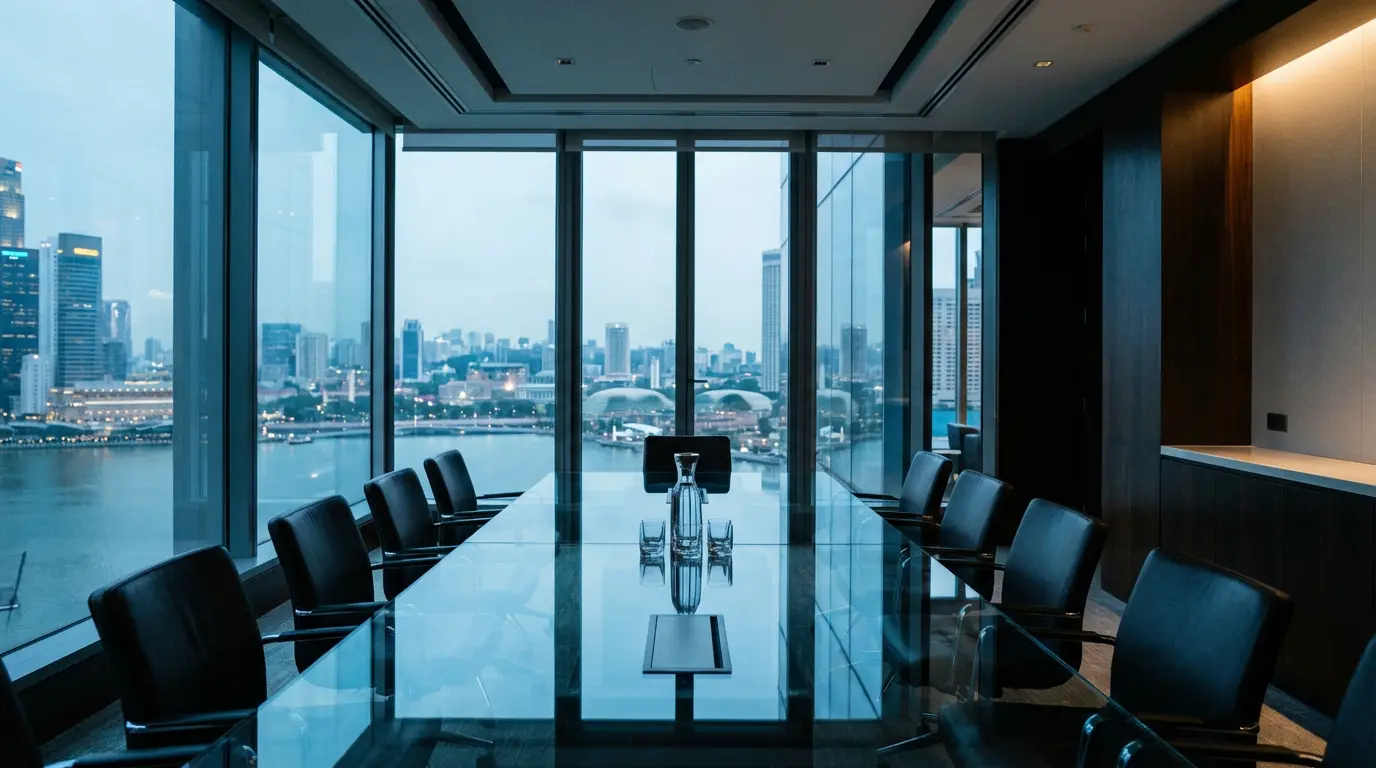
If the offsite is mostly governance — a board meeting, a quarterly review, a compliance refresh — Singapore wins outright. The optics are unimpeachable, the venues are interchangeable in a useful way, and nobody on the agenda will spend an evening explaining to their spouse why the company offsite was in Thailand. The 30-minute taxi from anywhere to anywhere also matters more than anyone admits when the schedule is back-to-back.
Singapore also wins when the team includes regulators, auditors, or board members for whom Bangkok is politically awkward. We have a few clients in regulated financials who simply cannot host a Thai offsite without a paper trail they would rather not produce. The right answer there is Singapore, and we will say so.
Where Bangkok quietly wins
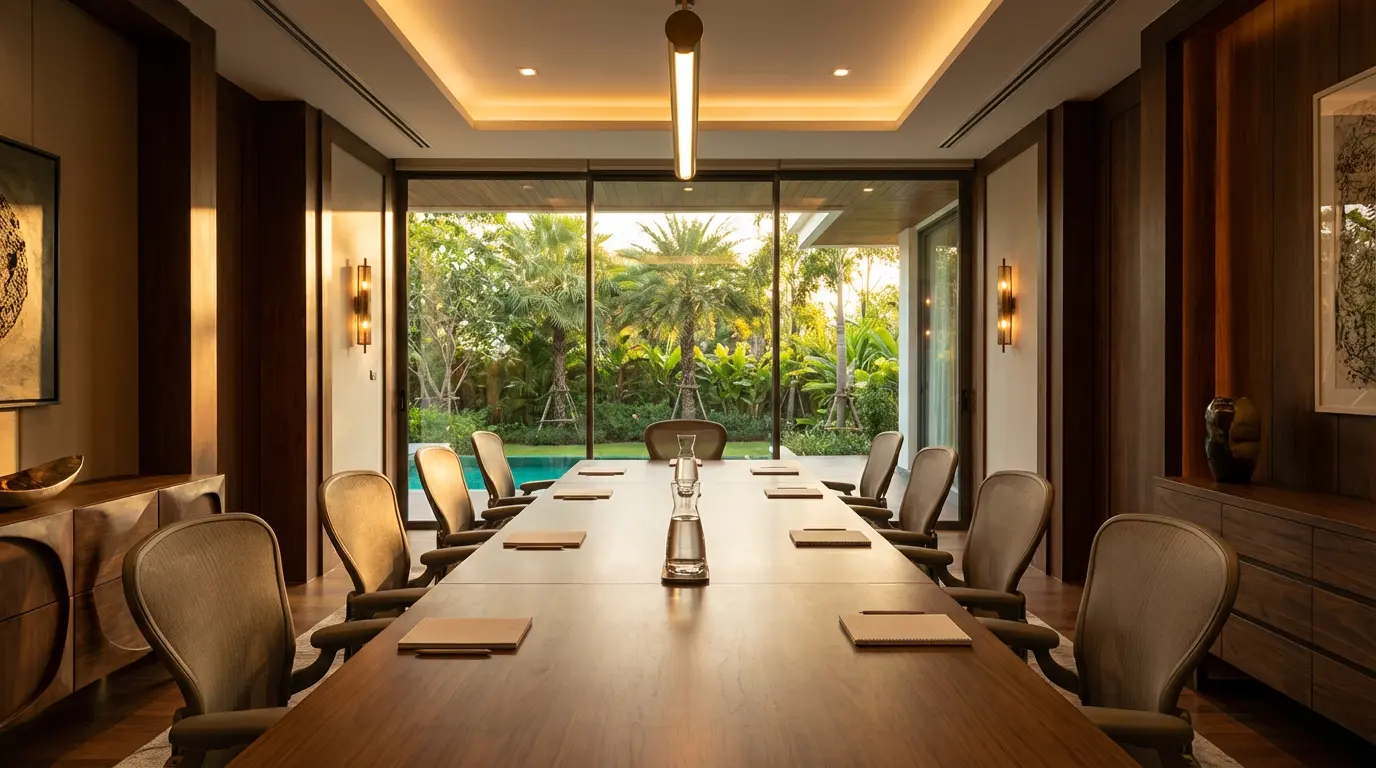
If the offsite is meant to change how the team works together — and most leadership offsites should be — Bangkok is structurally the better setting. The reason is that Bangkok lets you put a team into a single private villa with a real boardroom upstairs, a pool downstairs, a kitchen team in the back, and a garden gate that nobody walks out of accidentally. Singapore cannot do that. The closest equivalent in Singapore is a Sentosa rental that costs more, sleeps fewer, and is harder to staff.
The same calibre of room, food and service lands roughly thirty to forty per cent cheaper in Bangkok than in Singapore. That is not the headline reason to pick the city, but it changes what is possible. A budget that buys two nights in Singapore buys a full week in Bangkok with a private chef, a host, drivers, and the boardroom included. The team finishes the week sharper, not poorer.
And then there is the after-hours, which Singapore structurally cannot offer in the same form. We are not talking about anything indelicate — we are talking about the dinner that happens after the working day, in a room that belongs to the group, with a host who knows when to step out. The conversations that close out an offsite tend to happen there, and Bangkok has more of those rooms than any other city in the region.
How the choice usually breaks
Our heuristic, after a decade of running both: pick Singapore if the deliverable is a signed-off deck and nothing else needs to change. Pick Bangkok if the deliverable is a team that operates differently when they get back to their desks.
The trap is choosing Singapore by default, then trying to rescue the offsite with a corporate dinner cruise on the last night. The cruise is fine. It does not change anything. The team flies home with the same internal politics they arrived with, and the only thing that changed is the line item.
The mirror trap is choosing Bangkok and then booking a hotel because the procurement team is more comfortable with a known chain. A hotel offsite in Bangkok is the worst of both cities — it gives up the privacy the villa would have provided and the optics the Singapore tower would have provided, and it costs more than either.
The week that combines both
A pattern we run perhaps four times a year for cross-border teams: two days in Singapore for the formal sessions and the board lunch, then a 90-minute flight to a private villa in Bangkok or Phuket for the working sessions and the closing dinner. Forty-eight hours of optics, then seventy-two hours of work. The team flies home together on the Sunday night. Everyone files the right expense in the right city, and the offsite actually delivers what it was meant to.
This is the answer for clients who cannot make the all-in-Bangkok case to their board but who know the all-in-Singapore version will under-deliver. It is more logistics than either pure version, and it is what we usually recommend when the stakes are real.
How to choose, in one line
If you want the team to leave the offsite changed, come to Bangkok. If you want them to leave with a signed-off deck and nothing else, stay in Singapore. Both are valid answers — most teams need the first one more often than they admit, and a good number of them solve it by doing both.
If you are weighing the executive offsite for a small leadership group in Bangkok, send us the brief and we will draft the shape of the week.
Every one of these calls runs through the network.
Either city is run through the same network and host service.